


When purchasing equipment for military units, command posts, and situation centers, customers increasingly look beyond technical specifications and consider the codification status of the product. Procurement documents may refer to NSN and NCAGE — two distinct identifiers used within the NATO Codification System.
What do NSN and NCAGE mean for the customer? How do they support procurement and inventory management? And does an NSN mean that a product is NATO-certified? Here is what these codes actually confirm and which documents should be checked before placing an order.
What is equipment codification under the NATO system?
The NATO Codification System (NCS) is a system for classifying and identifying items of supply. It provides a consistent way to describe equipment, materials, spare parts, and other items required for logistical support.
Codification helps distinguish one item of supply from another, reduce duplicate inventory records, and simplify the exchange of cataloguing data between organizations. It applies both to complete equipment and to components that may need to be replaced during operation.
Ukraine participates in the NATO Codification System. Its National Codification Bureau uses the code 61, which may appear within the NSNs assigned by that bureau.
What is NCAGE and what is it used for?
NCAGE (NATO Commercial and Government Entity Code) is a five-character code that identifies an organization within the NATO Codification System. It can be used for manufacturers, suppliers, and other organizations whose information is associated with items of supply.
For customers, NCAGE provides a way to identify precisely which organization is associated with particular cataloguing records. This is especially helpful when documentation includes a brand name, a legal entity, trade names, or several suppliers.
- Helps identify a manufacturer or supplier in cataloguing records.
- Allows organizational details to be cross-referenced with information about items of supply.
- Reduces the risk of confusing organizations with similar names.
What is an NSN — a NATO Stock Number?
An NSN (NATO Stock Number) is a 13-digit number used to identify an item of supply within the NATO Codification System. It is associated with the item’s defined characteristics and cataloguing records.
Unlike a manufacturer’s internal product code, an NSN is a standardized identifier within the codification system. Under certain conditions, a single item of supply may cover interchangeable products. An NSN therefore does not always correspond directly to the name of one commercial model.
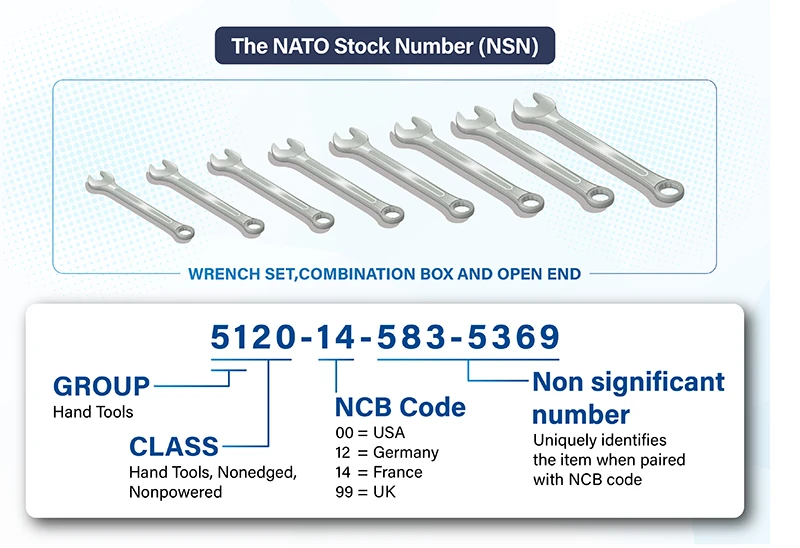
How is a 13-digit NSN structured?
| Part of the number | Meaning |
|---|---|
| First 4 digits | Supply group and class code |
| Next 2 digits | Code of the National Codification Bureau that assigned the number |
| Last 7 digits | Registration number of the item of supply |
Example of the format: XXXX-61-XXX-XXXX, where 61 identifies Ukraine’s National Codification Bureau. This illustrates the structure and is not a valid product number.
The codification bureau code within an NSN should not automatically be interpreted as the country of manufacture. Supporting documentation should be reviewed to verify a product’s origin and characteristics.
NSN vs. NCAGE: what is the difference?
Identifies an organization: a manufacturer, supplier, or another participant in the system.
Identifies an item of supply using the NATO Codification System’s records.
| Criterion | NCAGE | NSN |
|---|---|---|
| What it identifies | An organization | An item of supply |
| Format | 5 characters | 13 digits |
| Primary purpose | Identifying a manufacturer or supplier | Inventory management and logistical identification of an item |
| Is it a quality certificate? | No | No |
| Does it guarantee a contract? | No | No |
Having an NCAGE as a manufacturer and having an NSN assigned to a specific item of supply are therefore two separate matters that should be verified independently.
How does codification benefit military customers?
1. More accurate identification during procurement
A single equipment range may include several variants. For example, automated operator workstations may differ in the number of displays, computer specifications, and included components. An NSN helps identify the item of supply, but the customer must still confirm that it covers the required configuration.
2. Standardized inventory records
Consistent identification simplifies asset lists, requirements planning, and work with cataloguing data. This is particularly important when equipment comes from different suppliers or is transferred between units.
3. Maintenance planning
Individual components and spare parts may also have their own NSNs. This can help identify the items needed for repair or replacement more precisely when they have been codified as separate items of supply.
4. More consistent information in logistics and procurement
Codification records provide a common basis for exchanging information between logistics services, military organizations, and partners that use the NCS. However, each procurement procedure has its own rules and documentation requirements.
Does an NSN mean that equipment is NATO-certified?
No. Codification is not certification. An NSN confirms that an item of supply has been assigned a cataloguing identifier. It does not replace technical testing, certificates of conformity, performance assessments, or other documents required for a particular equipment category.
- Codification — classification and identification of an item of supply.
- Certification — confirmation of compliance with specified requirements under the relevant procedure.
- Authorization for operational use and formal acceptance into service — separate procedures for relevant categories of military equipment, where applicable.
An NSN should not be interpreted as automatic inclusion in NATO procurement programs or as a guarantee of a contract award.
ELPIX equipment and codification
ELPIX is a Ukrainian manufacturer of interactive equipment for command posts, situation centers, information environments, and other specialized workspaces. The company has an NCAGE code, and according to ELPIX, certain products have undergone codification and received NATO Stock Numbers (NSNs).
Its product range includes automated operator workstations and mobile command posts, interactive tables, and mobile video walls for displaying information from multiple sources.
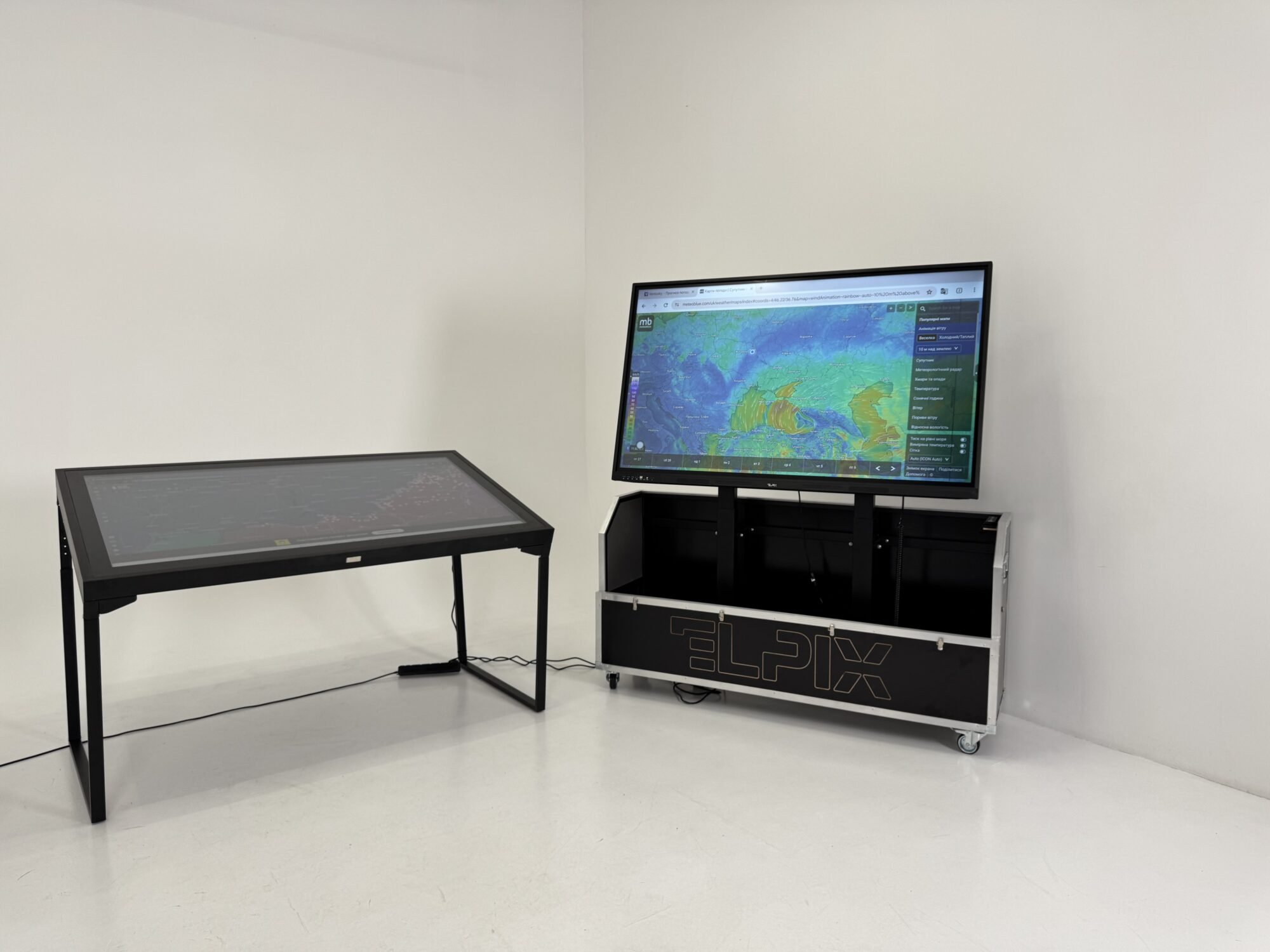
Large-format touchscreen tables for teamwork, information analysis, planning, and data visualization. The codification status must be verified for each specific product.
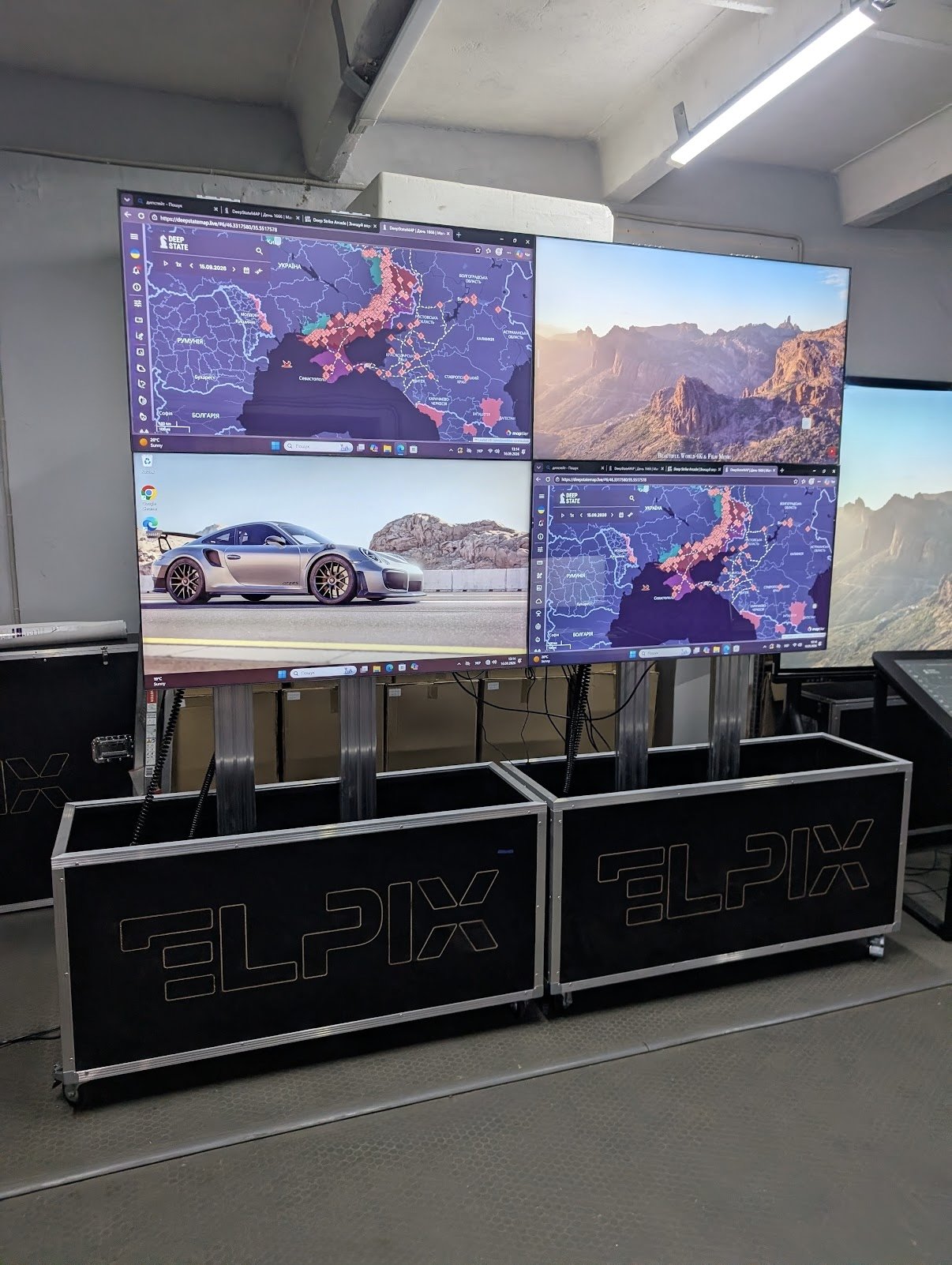
A modular solution for displaying information from multiple sources on a large screen.
The photographs show ELPIX equipment but do not prove that the pictured models have been assigned NSNs. Codification evidence should be requested for the specific item of supply and configuration.
How to verify NSN and NCAGE before purchasing equipment
To avoid confusing different modifications or legal entities, customers should check several details before placing an order.
- NCAGE: verify which organization the identifier belongs to.
- NSN: confirm whether the required item of supply has been assigned a number.
- Configuration: compare the product name, included components, modification, and technical specification with the codification records.
- Supporting evidence: request an extract from the relevant catalogue or another document containing the item’s cataloguing details, if necessary.
- Procurement requirements: separately check certificates, test reports, approvals, and any other required documents, where applicable.
This is particularly important for equipment available in several versions: an identifier for one modification should not be applied to another without verification.
Conclusion: what NSN and NCAGE mean for customers
NCAGE identifies an organization, while NSN identifies an item of supply. These identifiers help standardize cataloguing data, simplify equipment identification, and support subsequent inventory management. They do not replace technical documentation or confirm NATO certification.
When selecting equipment for military units, customers should verify not only whether an identifier is listed in the product description but also whether it corresponds to the exact model and configuration.
ELPIX welcomes cooperation with military units, charitable foundations, and partners involved in equipping command posts and situation centers. To select equipment and clarify the codification status of a specific product, please contact us through the official ELPIX website.
Reference sources: NATO Codification System — Fact Sheet and Ministry of Defence of Ukraine: How Weapons Are Codified in NATO Countries and Ukraine.